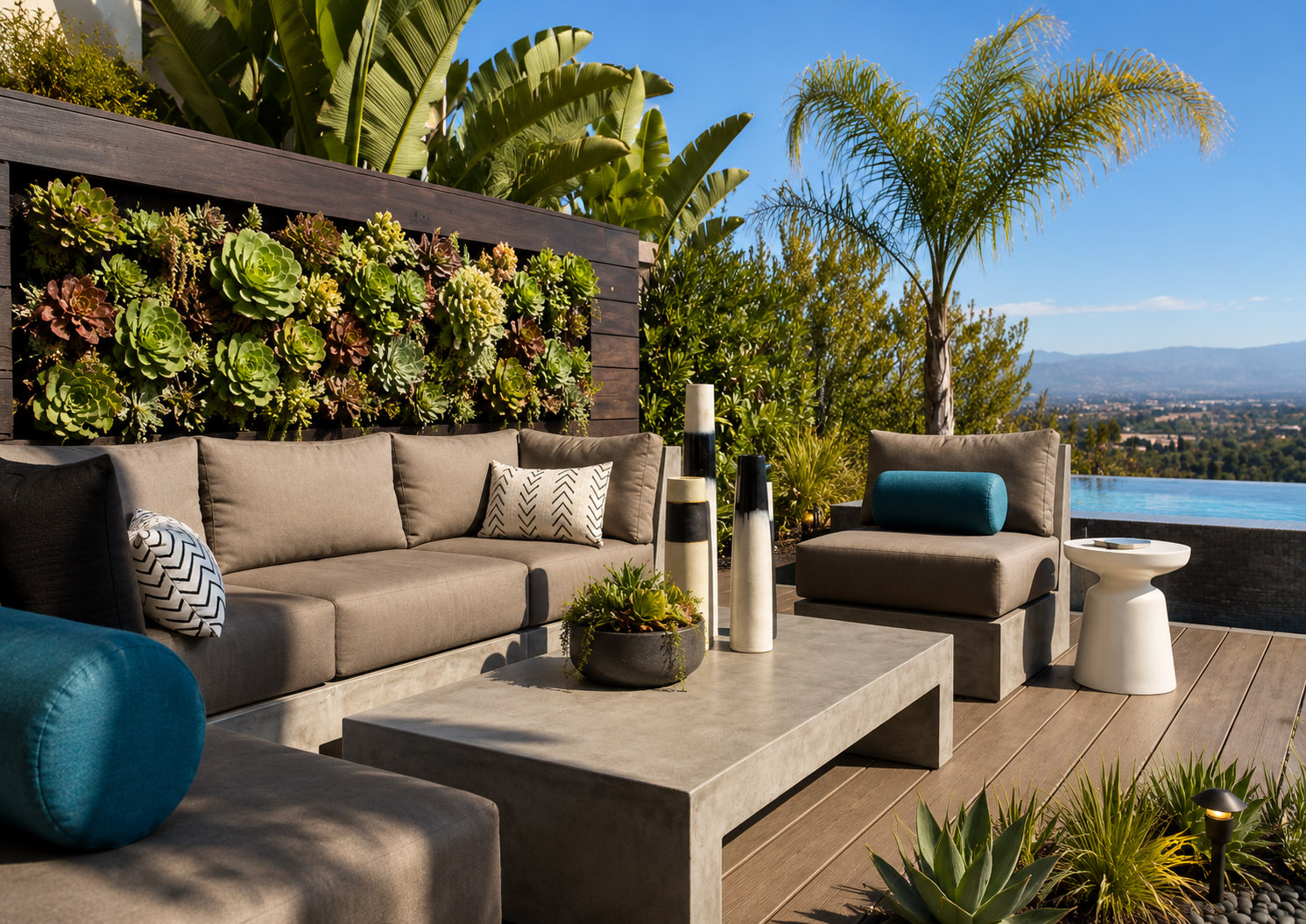
Living Wall Questions People Actually Ask
People shopping for living walls ask the same questions over and over — on Reddit, in consultations, and in RFPs. Cost. Water. Weight. What happens when you leave town. Whether the wall belongs in an office lobby or a kitchen. Whether stick-on kits for apartments are the same thing as an engineered system.
They are not the same thing. Elevation designs and installs professional living walls for homes, hospitality, and commercial spaces — systems with irrigation, structure, planting density, and a maintenance path. This page answers the questions people actually ask, without the soft sell and without pretending every wall is a DIY weekend project.
If you want ranges before a site visit, start with our living wall cost guide. If you want to test plant patterns, use the planting map.
Cost and value
How much does a living wall cost to install?
Most Elevation projects land between $7,500 and $65,000+, depending on size, access, indoor vs outdoor, irrigation, framing, planting density, and finish level. Residential accent walls often sit in the $7,500–$18,000+ range. Outdoor vertical gardens run roughly $9,000–$22,000+. Commercial work is typically $15,000–$45,000+. Hospitality installations with elevated detailing often range $18,000–$65,000+.
Per-square-foot numbers float around online and usually mislead. Small walls cost more per square foot because fabrication, mobilization, and irrigation setup do not shrink linearly. Treat published ranges as planning figures, then get a site-specific proposal. Details live on elevationlivingwalls.com/living-wall-cost.
What is the real cost of maintaining a living wall?
A living wall is not set-and-forget art. Budget for irrigation checks, pruning, plant replacements, nutrition, and seasonal adjustment. Frequency depends on environment and system: some residential walls need light owner care plus periodic pro visits; commercial and hospitality walls usually need a contracted maintenance cadence so the wall stays photo-ready year-round. Skipping maintenance is how “beautiful day one” becomes “patchy in six months.”
Are green walls worth the investment?
Worth it when the wall solves a design or brand problem — arrival impact, acoustic softening, biophilic density where floor planters cannot go, or a courtyard that needs a vertical focal point. Not worth it if you want zero upkeep, a temporary rental fix, or the cheapest square footage of greenery online. Property value can rise with a well-executed feature, but treat that as a secondary benefit, not a guaranteed appraisal line item.
Are there budget-friendly options?
Yes — within reason. Smaller residential accents, simpler framing, and restrained plant palettes lower cost. What we do not sell as “budget living walls” are peel-and-stick apartment kits or fake-plant panels marketed as the same product. If your budget cannot support irrigation, structure, and plant health, wait or scale the wall down. A smaller engineered wall beats a large underbuilt one.
Install, structure, and systems
Do green walls need special watering systems?
Professional living walls almost always need dedicated irrigation — water source, valves, emitters or similar delivery, drainage, and ideally automation or monitoring. Hand-watering a full wall is a liability, not a plan. Outdoor walls add weather exposure and drainage coordination; indoor walls need waterproofing and overflow paths so moisture stays in the system, not in the drywall.
How do you water a vertical garden wall?
Through the irrigation design: timed or sensor-driven cycles matched to plant type, light, and season. Day-to-day, you should not be climbing a ladder with a hose. Your role is noticing alerts, dry zones, or overflow — then calling service if something looks off. Vacation travel is exactly why automation and monitoring exist.
Do I need a professional to install a living wall?
For engineered systems with irrigation, structure, and warranty expectations: yes. DIY pocket planters and pallet projects are a different category. Elevation focuses on professional design-build, not apartment stick-on kits. If a landlord forbids wall attachment or you cannot add irrigation, a freestanding planter or a different biophilic solution is usually the honest answer — not forcing a living wall where it cannot perform.
How much weight do green walls add? Can any surface support one?
Living walls add meaningful load: plants, media or modules, water, framing, and fasteners. Not every partition wall can take it. We assess structure, attachment method, waterproofing, and access before we promise a layout. “Any surface” is marketing language. Substrate, height, seismic region, and whether the wall is interior or exterior all matter.
What is the installation timeline?
Depends on scope. Compact residential walls can move faster once design and site conditions are locked. Commercial and hospitality projects need coordination with GC schedules, electrical/irrigation rough-in, lifts, and punch. Rush timelines are possible when the site is ready; they are expensive when the site is not.
Apartments, rentals, and wall support
Rental constraints (no drilling, no water line, deposit risk) often rule out a true living wall. Temporary greenery or freestanding pieces may fit better. If you own the property and the wall can support the system, we size for structure first — not aesthetics alone.
Care and maintenance
How often do you need to maintain a vertical garden?
Expect regular light attention and scheduled deeper service. Pruning keeps density and silhouette. Fertilizer or nutrition programs keep color and vigor. Plant swaps replace weak performers before they open holes in the composition. The learning curve for owners is manageable when the system is designed well; it is steep when irrigation is improvised.
What happens if you vacation?
Automated irrigation plus a monitoring path (and for commercial clients, a maintenance partner) is the answer. A living wall should not depend on a neighbor remembering to water it. If your travel pattern is heavy and you refuse automation, reconsider scale.
Do vertical gardens attract pests or mold?
Any plant mass can host pests if neglected. Mold and moisture issues show up when drainage, airflow, or waterproofing is wrong — not because “green walls always mold.” Correct detailing and maintenance keep both risks ordinary and manageable.
How long do vertical gardens last?
The structure and irrigation can last many years when specified correctly. Plant communities evolve: individual plants are replaced over time while the wall as a system continues. Think of lifespan as ongoing horticulture, not a static finish with a single expiration date.
Design, plants, and light
What is the difference between a green wall and a vertical garden?
People use the terms interchangeably. In practice, “living wall” and “green wall” usually mean an engineered vertical planting system; “vertical garden” can mean anything from a herb pocket to a full facade. Ask what is behind the photo: irrigation, root volume, attachment, and maintenance — not the label.
What plants work best? Can they survive low light?
Pros choose plants for light, exposure, irrigation profile, density goals, and how the composition reads from the intended viewing distance. Low light is possible with the right indoor palette and often supplemental lighting — not by forcing sun plants into a dim corridor. Outdoor SoCal walls face heat, wind, and dry seasons; indoor walls face HVAC and light levels. Explore patterns on our planting map, then refine with a horticulture pass for the actual site.
Can you customize design, colors, and furniture pairing?
Yes. Framing, plant palette, cloud vs linear patterns, lighting, and surrounding materials are design decisions. Living walls pair best with furniture and finishes that leave the wall readable — not cluttered in front of it. Bedrooms, kitchens, and bathrooms are all possible when humidity, light, waterproofing, and plant choice match the room. Kitchens and baths add grease, steam, or splash risk; we design for that or we say no.
Do living walls improve air quality? Are they still in style?
Plants contribute to a healthier indoor feel; treat dramatic “purifies the whole building” claims with skepticism. Style-wise, biophilic design is not a fad cycle — hospitality, wellness, and workplaces keep specifying living walls because guests and teams respond to them. Fake plant walls are a different product with different upkeep and a different look up close.
How much space do you need? What about temperature and lighting?
You need wall area, access for install and maintenance, and clearance so people are not brushing through wet foliage all day. Temperature swings and lighting drive plant choice and irrigation timing. Grow lights help where architecture cannot deliver enough natural light.
Commercial, hospitality, and offices
Do living walls work in commercial offices?
Yes — when light, irrigation, access, and maintenance are in the scope from day one. Offices use living walls for brand presence, wellness narratives, and acoustic softening. Dense foliage can reduce perceived noise; it is not a substitute for proper acoustic design. See trade resources for designers and GCs coordinating specs.
Hospitality and guest-facing installs
Hotels, spas, and restaurants need walls that look intentional at 7 a.m. and at 9 p.m. That means higher finish, reliable irrigation, lighting, and a maintenance agreement. Browse outdoor and interior living wall work for context, then talk schedule and access early.
What about warranty, insurance, and downsides?
Ask any installer what is covered: structure, irrigation components, plant establishment, and what voids coverage. Elevation discusses warranty and care expectations in proposal — not as fine print after install. Honest downsides: living walls need water infrastructure, structural assessment, ongoing care, and a realistic budget. They are not invisible. They are not free. Done right, they are durable design infrastructure. Done cheap, they become a maintenance headache.
How do professionals choose plants?
By matching horticulture to the environment and the composition goal — not by shopping whatever is on sale that week. Density, texture contrast, seasonal behavior, replaceability, and irrigation compatibility beat novelty plants that look good for two weeks.
What Elevation will and will not do
We build engineered living walls for residential, commercial, and hospitality clients who want the wall to last. We will tell you when a site cannot support irrigation or structure. We will not pitch apartment peel-and-stick kits as the same category as a professional system. Plants Grow People™ is the point of the work — spaces that feel alive because the horticulture and the engineering both hold up.
Next step
If you have a wall, a budget range, and a timeline, request a project consultation. Bring photos, approximate dimensions, indoor vs outdoor, and whether irrigation access exists. We will tell you what is feasible — including when the better move is a smaller wall or a different approach.
Phone: 949.627.0580 · License #1064586


